

S.M. Wires delivers high-quality ferrous and non-ferrous wires nationwide, trusted by leading OEMs across India.

The Wire Making Process

From Wire Rod to Finished Wire Products

The wire mill represents the final transformation in Pacific Steel's integrated recycling process, converting wire rod coils into bright hard drawn wire and galvanized wire products. This sophisticated operation demonstrates environmental leadership while producing high-quality wire for diverse applications.
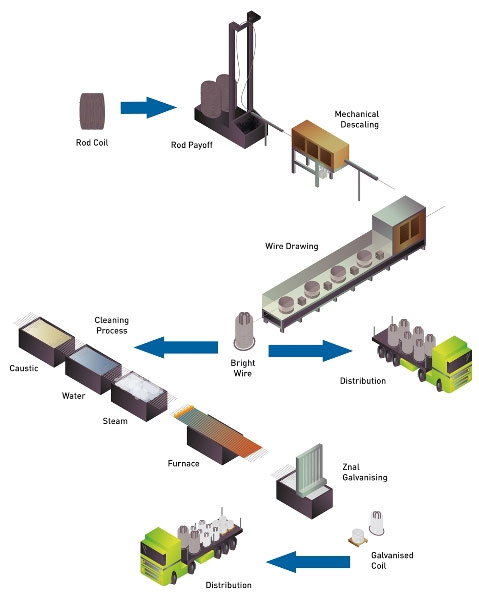
Stage 1: Raw Material Supply and Integration

Internal Supply Chain Excellence

  • 99.5% Internal Sourcing: Wire rod coils supplied by on-site rolling mill
  • Eliminates external transportation costs and delays
  • Ensures complete quality control from scrap to finished wire
  • Maintains traceability throughout entire production chain
  • Provides scheduling flexibility and production coordination
  • Major Customer Relationship: Wire mill as rolling mill's biggest customer
  • Consumes approximately 32,000 tonnes per annum
  • Represents significant portion of rolling mill's wire rod production
  • Creates stable internal demand for wire rod products
  • Enables long-term production planning and optimization

Strategic Business Integration

  • Vertical Integration Benefits:
    • Cost control through internal supply chain
    • Quality assurance from raw material to finished product
    • Reduced inventory carrying costs
    • Elimination of third-party supplier risks
  • Production Coordination:
    • Wire rod specifications optimized for wire drawing
    • Production scheduling synchronized between mills
    • Quality specifications tailored to wire mill requirements
    • Efficient material flow within integrated facility

Stage 2: Environmental Innovation - Scale Removal Evolution

Historical Acid Pickling Process

  • Previous Method: Chemical scale removal using acid pickling
    • Effective but environmentally problematic
    • Generated hazardous chemical waste requiring disposal
    • Created workplace safety concerns
    • High ongoing chemical costs and regulatory compliance issues
  • Environmental Concerns:
    • Acid waste disposal challenges
    • Air quality impacts from chemical processes
    • Worker safety and health considerations
    • Regulatory compliance complexity and costs

Mechanical Descaling Innovation Journey

  • Technology Transition Timeline:
    • 1999: Initial trials began on mechanical descaling equipment
    • 8-Year Development Period: Gradual process refinement and expansion
    • Complete Transition: Acid pickling process fully decommissioned
    • Environmental Victory: Elimination of chemical waste generation
  • Technology Development Challenges:
    • Mechanical systems initially couldn't handle full product range
    • Required extensive testing and equipment modification
    • Process optimization needed for different wire rod grades
    • Quality standards maintenance during transition period

Scale Formation and Properties

  • Scale Definition: Thin oxide skin formed during steel cooling
    • Natural result of hot steel exposure to oxygen
    • Adheres strongly to steel surface
    • Must be completely removed for quality wire drawing
    • Varies in thickness and adhesion based on cooling conditions
  • Scale Removal Necessity:
    • Prevents proper die performance during wire drawing
    • Causes surface defects in finished wire
    • Interferes with subsequent coating processes
    • Essential for achieving bright, smooth wire finish

Stage 3: Advanced Mechanical Descaling System

Stage 1: Rod Payoff & Initial Scale Removal

  • Vertical Unwinding System:
    • Coils loaded onto specialized rod payoff platform
    • Wire rod unwinds vertically for controlled feeding
    • Eliminates coil tangling and provides steady rod flow
    • Enables precise speed control for downstream processing
  • Reverse "S" Roller Configuration:
    • Rod threaded through series of reverse-bend rollers
    • Creates alternating bending stresses in rod
    • Mechanical stress breaks scale adhesion to steel surface
    • Simple but highly effective initial descaling method
  • 60% Scale Removal Achievement:
    • Majority of scale removed through mechanical bending
    • Broken scale falls into collection bins below payoff
    • Clean collection system prevents workplace contamination
    • Demonstrates effectiveness of mechanical approach

Stage 2: DECALUB Mechanical Descaling Unit

  • 360-Degree Tight Bending System:
    • Rod subjected to extreme bending on both axes
    • Pulley system creates maximum mechanical stress
    • Removes additional 30% of remaining surface scale
    • Prepares rod for final scale removal stage
  • Dual-Axis Bending Benefits:
    • Complete surface exposure to mechanical stress
    • Uniform scale removal around rod circumference
    • Elimination of scale adhesion weak points
    • Thorough preparation for final cleaning stage

Stage 3: Wire Brush Final Cleaning

  • Dual Wire Brush System:
    • Two sets of rotating wire brushes
    • Removes final 10% of stubborn surface scale
    • Provides bright, clean surface finish
    • Prepares rod for precision wire drawing operations
  • Complete Scale Removal Achievement:
    • 100% scale removal through three-stage process
    • No chemical waste generation
    • Recyclable scale collection for secondary applications
    • Superior environmental performance compared to acid pickling

Environmental and Economic Benefits

  • Zero Chemical Waste: Complete elimination of acid waste disposal
  • Recyclable By-Products: All collected scale can be recycled or sold
  • Worker Safety: Elimination of chemical exposure risks
  • Cost Reduction: No ongoing chemical purchase or waste disposal costs
  • Regulatory Simplification: Reduced environmental compliance requirements

Stage 4: Wire Drawing Operations

Multi-Machine Configuration

  • Five Wire Drawing Machines: Each optimized for specific products
    • Different die configurations for various wire sizes
    • Specialized setups for different wire applications
    • Flexibility to produce wide range of wire diameters
    • Production optimization through machine specialization
  • Common Drawing Principle: Universal process across all machines
    • Rod passed through series of progressively smaller dies
    • Compression/drawing rather than material removal
    • Maintains material volume while changing dimensions
    • Consistent quality approach regardless of final product

Die Drawing Technology

  • Progressive Size Reduction:
    • Series of dies with decreasing internal diameters
    • Each die reduces rod diameter by specific amount
    • Gradual reduction prevents wire breakage or defects
    • Smooth surface finish development through die progression
  • Compression vs. Cutting:
    • Material compressed and drawn, not shaved or cut
    • Maintains steel's internal structure and properties
    • "Play-Doh" analogy: material flows and elongates under pressure
    • No material waste through cutting or machining processes

Remarkable Material Transformation

  • Volume Conservation Principle:
    • Input: 1 tonne of rod produces 990kg of wire (1% loss only)
    • Minimal material loss demonstrates process efficiency
    • Loss primarily due to handling and minor surface cleaning
    • Exceptional material utilization rate
  • Dramatic Length Increase Example:
    • Starting Point: 6mm rod coil (1.45 tonnes, 6.5 km long)
    • Finished Product: 2.5mm wire (same 1.45 tonnes, 37.5 km long)
    • Length Multiplication: Nearly 6 times longer than original rod
    • Original Source: All from single 8.7-meter steel billet

Process Physics and Engineering

  • Cross-Sectional Area Calculation:
    • 6mm rod area: π × (3mm)² = ~28.3 mm²
    • 2.5mm wire area: π × (1.25mm)² = ~4.9 mm²
    • Area reduction ratio: 5.76:1
    • Length increase ratio: 5.76:1 (volume conservation)
  • Drawing Forces and Stresses:
    • Significant force required for diameter reduction
    • Dies must withstand high pressures and wear
    • Wire tension carefully controlled to prevent breakage
    • Lubrication systems essential for die performance

Stage 5: Bright Hard Drawn Wire Applications

Product Characteristics

  • "Bright" Finish:
    • Clean, scale-free surface appearance
    • Result of complete scale removal and smooth die drawing
    • Attractive appearance for visible applications
    • Superior surface for coating or further processing
    • Consistent surface quality throughout wire length
  • "Hard Drawn" Properties:
    • Increased strength from drawing process
    • Cold working during drawing increases tensile strength
    • Higher strength-to-weight ratio than original rod
    • Improved dimensional stability and straightness
    • Enhanced mechanical properties for structural applications

Diverse Application Markets

  • Mesh Manufacturing:
    • Welded and woven wire mesh products
    • Construction reinforcement applications
    • Industrial screening and filtering
    • Security fencing and barrier systems
    • Agricultural and livestock containment
  • Fastener Production:
    • Nail and screw manufacturing
    • Construction industry nail production
    • Specialty fastener applications
    • Hardware and DIY market products
    • Industrial fastening solutions
  • Display and Retail Applications:
    • Wire display stands and fixtures
    • Retail merchandise display systems
    • Point-of-sale fixture manufacturing
    • Custom display and exhibition structures
    • Architectural and decorative applications
  • Wire Rope Manufacturing:
    • Multi-strand cable production
    • Marine and maritime applications
    • Construction crane and lifting cables
    • Transportation and logistics systems
    • Specialty rope for extreme environments
  • Consumer Products:
    • Shopping trolleys and carts
    • Retail shopping cart manufacturing
    • Institutional and commercial cart systems
    • Storage and organization products
    • Household and garden applications

Stage 6: Galvanizing Process - Complex Coating Technology

Process Complexity and Critical Parameters

  • Multi-Parameter Process:
    • Wire preparation and cleaning quality
    • Temperature control throughout process
    • Atmosphere composition and purity
    • Coating bath chemistry and temperature
    • Speed and tension control during processing
  • Zinc Aluminum (ZNAL) Bonding Science:
    • Chemical bonding between zinc-aluminum alloy and steel
    • Metallurgical reaction creates corrosion-resistant layer
    • Bond strength determines coating durability and performance
    • Process parameters directly affect bond quality

Stage 7: Product Packaging and Market Distribution

Bulk Commercial Products

  • 700kg Coils for Remanufacturers:
    • Large coils for industrial processing operations
    • Mesh manufacturers and wire rope producers
    • Fastener manufacturing operations
    • Custom fabrication and specialty applications
  • Industrial Customer Benefits:
    • Reduced handling and setup costs
    • Consistent wire quality for automated processing
    • Competitive pricing through bulk packaging
    • Technical support for specialized applications

Retail Distribution Products

  • 25kg and 39kg Fencing Coils:
    • Sized for agricultural and residential markets
    • Convenient handling for smaller operations
    • Standard sizes for distribution channel efficiency
    • Consumer-friendly packaging for retail sales
  • Distribution Market Strategy:
    • Rural supply stores and agricultural dealers
    • Hardware stores and home improvement centers
    • Fencing contractors and installation specialists
    • Export markets for international distribution

Stage 8: Sustainability and Market Innovation

Complete Recycling Success Story

  • 100% Recycled Content: From scrap metal to finished wire
    • Demonstrates circular economy principles
    • Environmental leadership in manufacturing
    • Sustainable alternative to virgin material production
    • Complete material lifecycle management
  • Zero Waste Achievement:
    • All process by-products recycled or sold
    • Scale removal creates recyclable materials
    • No chemical waste from mechanical descaling
    • Environmental excellence throughout operations

Market Innovation - Vineyard Applications

  • Sustainable Infrastructure Demand:
    • Vineyards specifying recycled content requirements
    • Environmental consciousness in agricultural markets
    • Premium market positioning for sustainable products
    • Demonstration of recycled material quality
  • Vineyard Structure Applications:
    • Trellis systems and plant support structures
    • Fencing for property boundaries and livestock
    • Infrastructure components meeting sustainability goals
    • High-quality performance from recycled materials

Environmental Impact and Recognition

  • Industry Leadership:
    • Pioneer in mechanical descaling technology
    • Complete elimination of chemical processes
    • Sustainable manufacturing demonstration
    • Model for industry environmental improvement
  • Economic and Environmental Balance:
    • Profitable operations with environmental excellence
    • Cost reduction through waste elimination
    • Premium market positioning for sustainable products
    • Demonstration that environmental responsibility enhances profitability

Key Success Factors

Technical Innovation
  • Mechanical Descaling Breakthrough: 8-year development achieved complete chemical elimination
  • Process Integration: Seamless flow from wire rod through finished products
  • Quality Control: Consistent products meeting international standards
  • Equipment Optimization: Five specialized drawing machines for product flexibility
Environmental Leadership
  • Chemical Process Elimination: Complete transition from acid pickling to mechanical descaling
  • Zero Waste Operations: All by-products recycled or sold for other applications
  • Sustainable Manufacturing: 100% recycled input materials with minimal environmental impact
  • Industry Model: Demonstration that environmental excellence enhances business success
Market Success
  • Product Diversity: Bright hard drawn wire and galvanized wire for multiple markets
  • Packaging Flexibility: Bulk industrial and retail consumer packaging options
  • Quality Recognition: Products meet demanding specifications for diverse applications
  • Innovation Response: Sustainable products for environmentally conscious markets
Operational Excellence
  • Internal Integration: 99.5% internal raw material supply ensures quality and cost control
  • Process Control: Sophisticated systems ensure consistent product quality
  • Continuous Improvement: Ongoing optimization of processes and quality systems
  • Safety and Efficiency: High-speed operations with comprehensive safety and quality systems